 Video on Patreon
Desert cactus
10 September 2026
Video - Level ◆◆◆
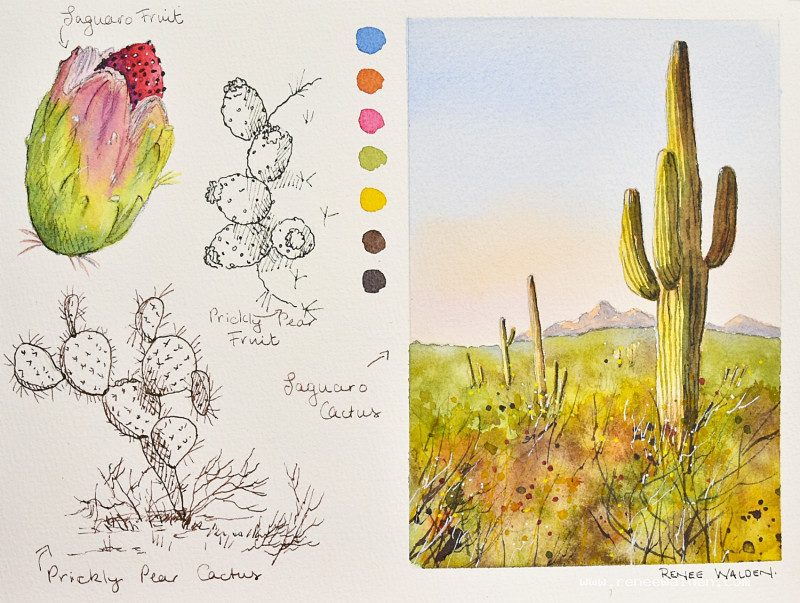
Lots of lovely light and texture in this scene! We paint some desert cactuses in late afternoon light, with the sun catching the plants and the mountains.
Apart from the golden light, the rest of the scene is all muted colours. I'm going to show you how to mix those and how to paint all the scrubby bushes in the foreground with minimal fuss.
We paint the main scene on the right in this lesson, and if you paint it in your sketchbook like I've done, then you can complete the sketchbook spread with other vignettes of your choice. My finished sketchbook spread is here for you to see, if you'd like to take inspiration from mine.
Happy painting!
Video run-through...
About This Painting
A desert scene bathed in golden light — muted, warm, and atmospheric. The key challenge is resisting the instinct to use bright greens and blues: everything in this scene is shifted toward the ochre and sienna end of the spectrum, even the sky and the cactuses themselves. The grooves of the cactuses are painted last as shadow lines, and the scrubby foreground is built up with layered washes and well-timed splattering.
A traceable drawing is available in the lesson description.
The Pencil Drawing
Place the main cactus slightly off-centre and high enough to see its top. Add smaller cactuses behind for depth, and scrubby twig and grass marks in the foreground to nestle the cactuses into the ground.
Colours to Prepare
- Cobalt blue — pale, for the sky and mountain shadows
- Quinacridone sienna — for the warm sky horizon, cactus shadow sides, and foreground
- Quinacridone rose — pale, for a pink tint at the horizon
- Hansa yellow medium — the sunlit side of cactuses and warm grass accents
- Sap green — dulled down for all foliage
- Sepia (or burnt umber plus a little blue) — for dark twigs and shadow mixes
- Permanent violet — a touch, for mountain shadows
All mixes should be kept muted — add sienna or sepia to anything that looks too vibrant.
Sky
Wet the entire sky with a flat brush, painting straight over the cactuses and background mountains — they'll be dark or will be repainted. Check for dry patches and pooling.
Drop in pale cobalt blue from the top down, then switch to quinacridone sienna along the bottom for a warm horizon glow. Add a faint touch of quinacridone rose. The two colours will meet and create a natural gray-brown transition — don't mix them on the palette. Keep the diagonal feel of the colour change.
Lift colour from the sunlit side of the main cactus while still wet. Let dry naturally.
Cactuses: First Wash
Paint each cactus section individually, wet-into-wet. The goal at this stage is roundness, not detail.
Wet each section, then drop Hansa yellow medium on the left (sunlit) side and quinacridone sienna on the right (shadow) side. Let them merge in the middle. Work with the brush on the surface rather than scrubbing — this keeps the washes luminous. There's no green at this stage; the golden light overrides it entirely.
Start with the smaller background cactuses to warm up, then work on the focal-point cactus. Let dry.
Mountains
The sky wash already laid golden light across the mountain area. All that's needed now is some craggy shadow on the right-hand side to suggest the forms.
Mix cobalt blue with a touch of permanent violet and a small amount of quinacridone sienna to dull it slightly — the mountains should look very far away. Keep this mix pale. Paint the shadow shapes on the right side of each peak, then while still wet, drop a very pale quinacridone sienna on the lit left side and let them merge softly. Everything here should stay blurry and distant.
Foreground Scrub
Mix a range of muted foliage colours — none of them bright:
- Sap green plus quinacridone sienna = olive-brown green
- Cobalt blue plus sap green plus sepia = dark grayish green
- Sepia alone or with a touch of sap green = dark brown
Work from the back toward the front. Use a large brush and lay in colours quickly, one into the next, letting them merge. As each area reaches a damp stage, splatter clean water into it to create blooms that suggest the texture of scrubby vegetation without painting every branch. Add colour splatters too — sienna, brown — while the surface is still receptive. Increase saturation and yellow tones toward the foreground to push it forward.
Clean the brush and lift out any areas where foliage has crept onto the cactuses.
Foreground Twigs
Mix sepia and cobalt blue into a very dark brown. Use a rigger or dagger brush, held toward the back for looser control, and flick in twig and grass marks — varied between warm brown and near-black. Let some start off the edge of the page so it feels like the viewer is standing among them. Keep marks smaller toward the background. Add a few pale yellow grass lines as well.
Cactus Shadows and Grooves
Mix a muted greenish-gray: sap green, cobalt blue, and sepia. This goes on the right-hand (shadow) side of each cactus section as a solid wash, and then as fine groove lines running vertically.
Use a medium brush for the solid shadow side and a fine brush (size 0 or 1) for the grooves. The grooves are slightly wobbly — cactuses aren't perfect. Make them a little darker where two sections join. Work on the focal-point cactus with more care; background cactuses can be simpler.
Pen Work and Final Details
Dark brown fountain pen ink — held upside down for the finest line — on the shadow sides only. A few extra twig marks, groove lines, and ground anchoring marks. Keep it subtle; the washes should still do most of the talking.
White gel pen or Posca marker for highlights on the sunlit cactus edges and a few sparkling foreground details. Yellow Posca or gouache for a few bright foreground dots and dashes.
Soften any harsh halos around background elements by gently lifting with a clean damp brush. Remove the tape.
Resources...
* Reference photo
* Drawing to trace
Join me on Patreon
Join my Adventures in Colour Tier for $16 to access this post and my full library of over 200 others including deep-dive videos and step-by-steps.